Breton Vineyard in the Bay of Saint-Brieuc
Why Kdouar ?
• A nod to the name of the neighborhood where the vineyard is located in Plérin: “La Cadoire.”
• The letter K is a strong symbol in Breton history and language. It refers to an inhabited place, an estate, a hamlet — here, my vineyard. It is also the chemical symbol for potassium, an element essential to the growth of vines and grapes.
• “Douar” means soil, earth, living matter in Breton. A proverb says: “Re gozh an douar evit ober goap anezhi” — “The earth is too old to be mocked.”
K DOUAR embodies this idea: producing wines that are respectful, good for both consumers and the planet. Brittany is my adopted land, and K DOUAR is a way to pay tribute to it.
People and animals
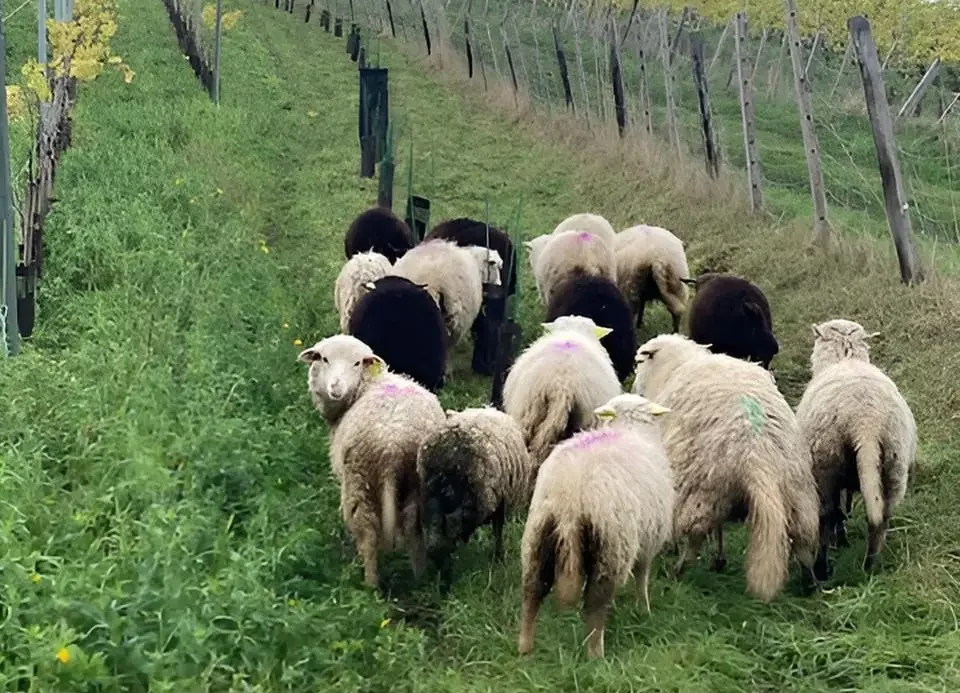
Without a tractor, to avoid soil compaction and reduce the vineyard’s carbon footprint, most of the work in the vines is done by hand. Soil cultivation is carried out using animal traction with a draft horse. In winter, during the vine’s dormant period, sheep graze between the rows.entre les rangs.
The Terroir
Located on the North Armorican Cadomian chain (over 600 million years old), the terroir of La Cadoire originates from some of the oldest rocks in France.
The vines grow on metamorphic rock rich in biotite: the mica schists of Le Légué.
A south-facing slope
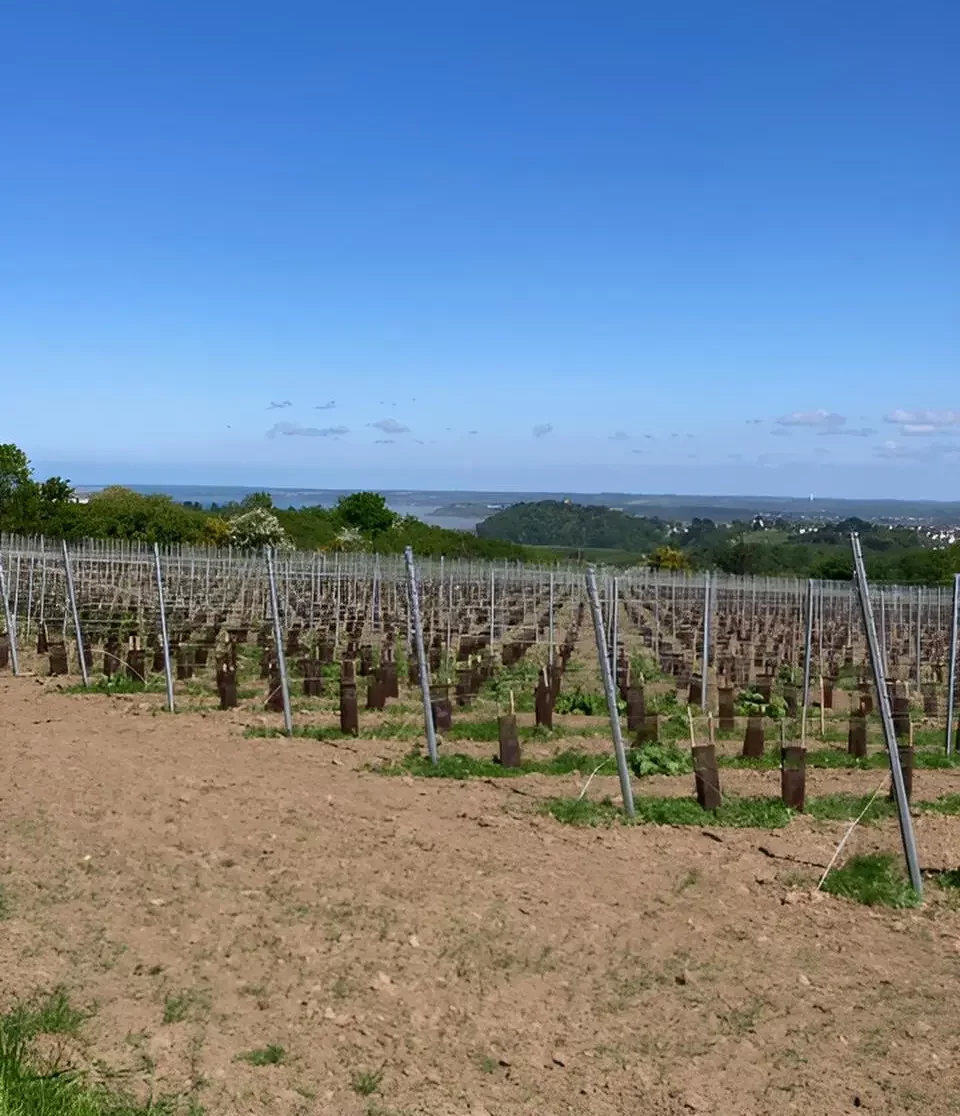
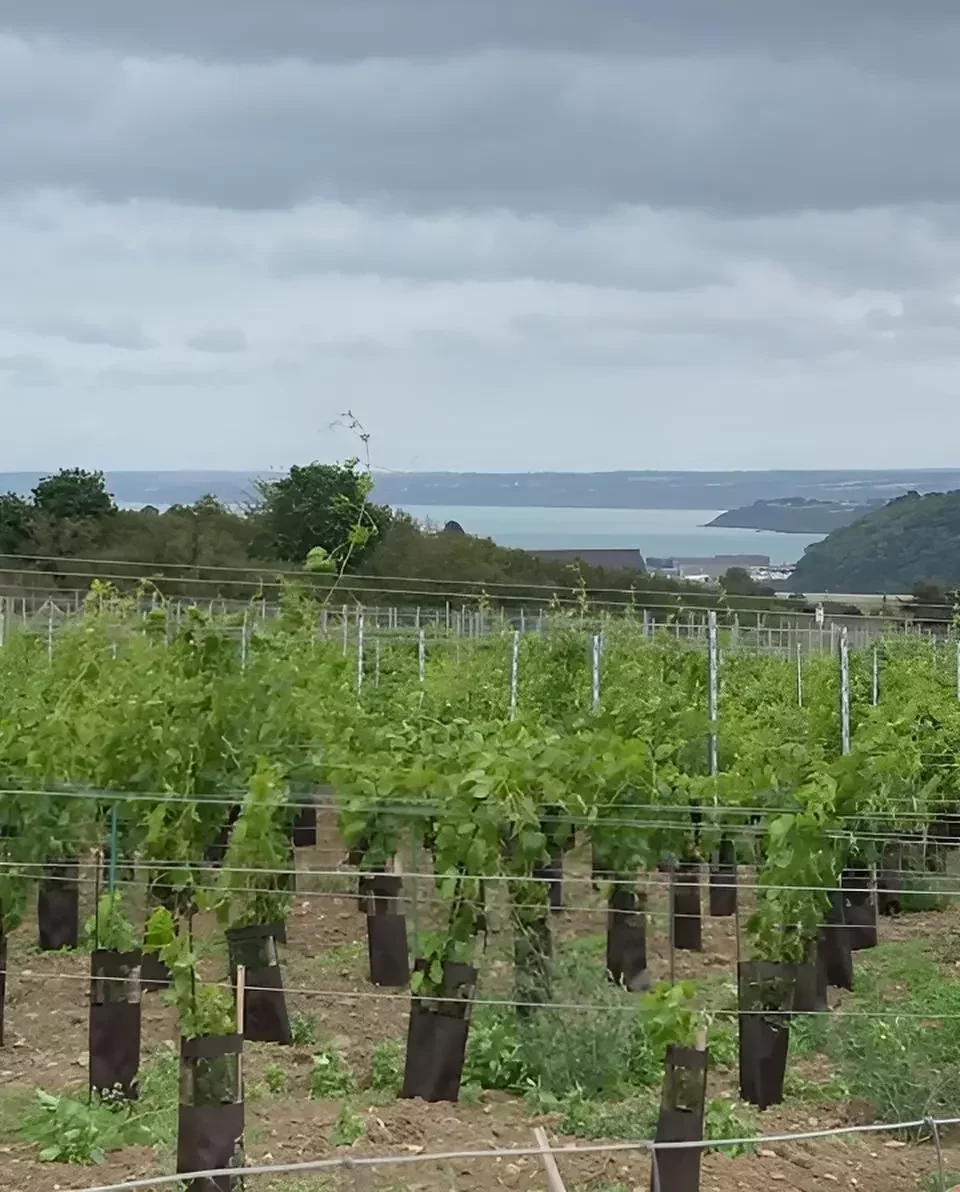
Located on a promontory at an altitude of 80 to 100 meters, at the mouth of the Bay of Saint-Brieuc, the vines are planted on a hillside well suited to viticulture. The slope allows for good air circulation around the grapes, as well as rapid drainage of rainwater.
The south-facing exposure of the vineyard slope is ideal for grape production in a northern climate. This orientation maximizes photosynthesis and promotes better ripening of the grape varieties.
Kdouar, a collective project
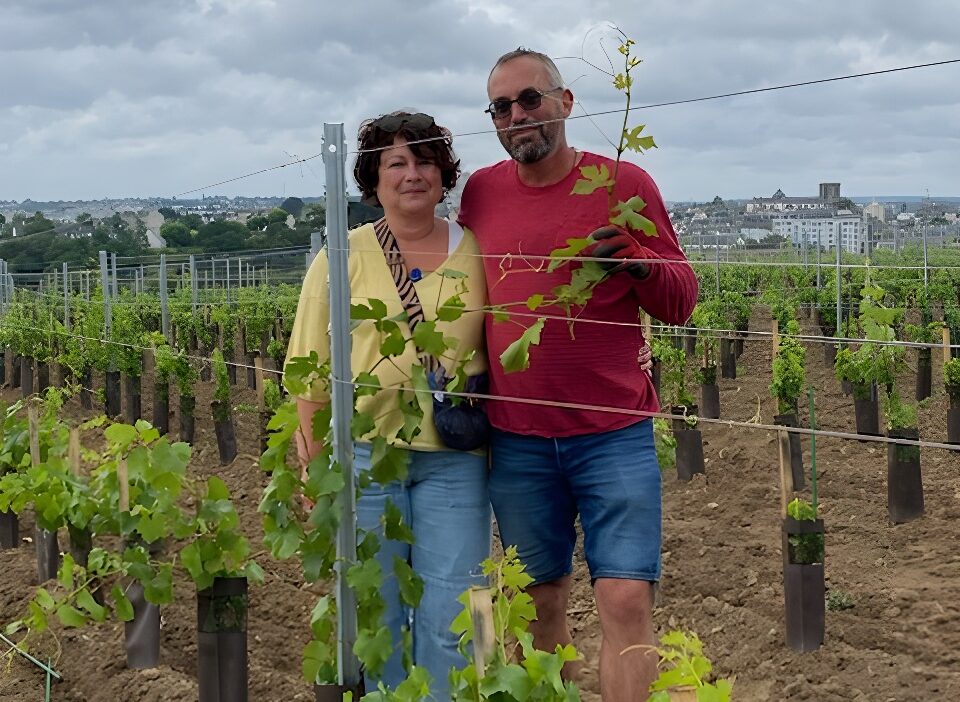
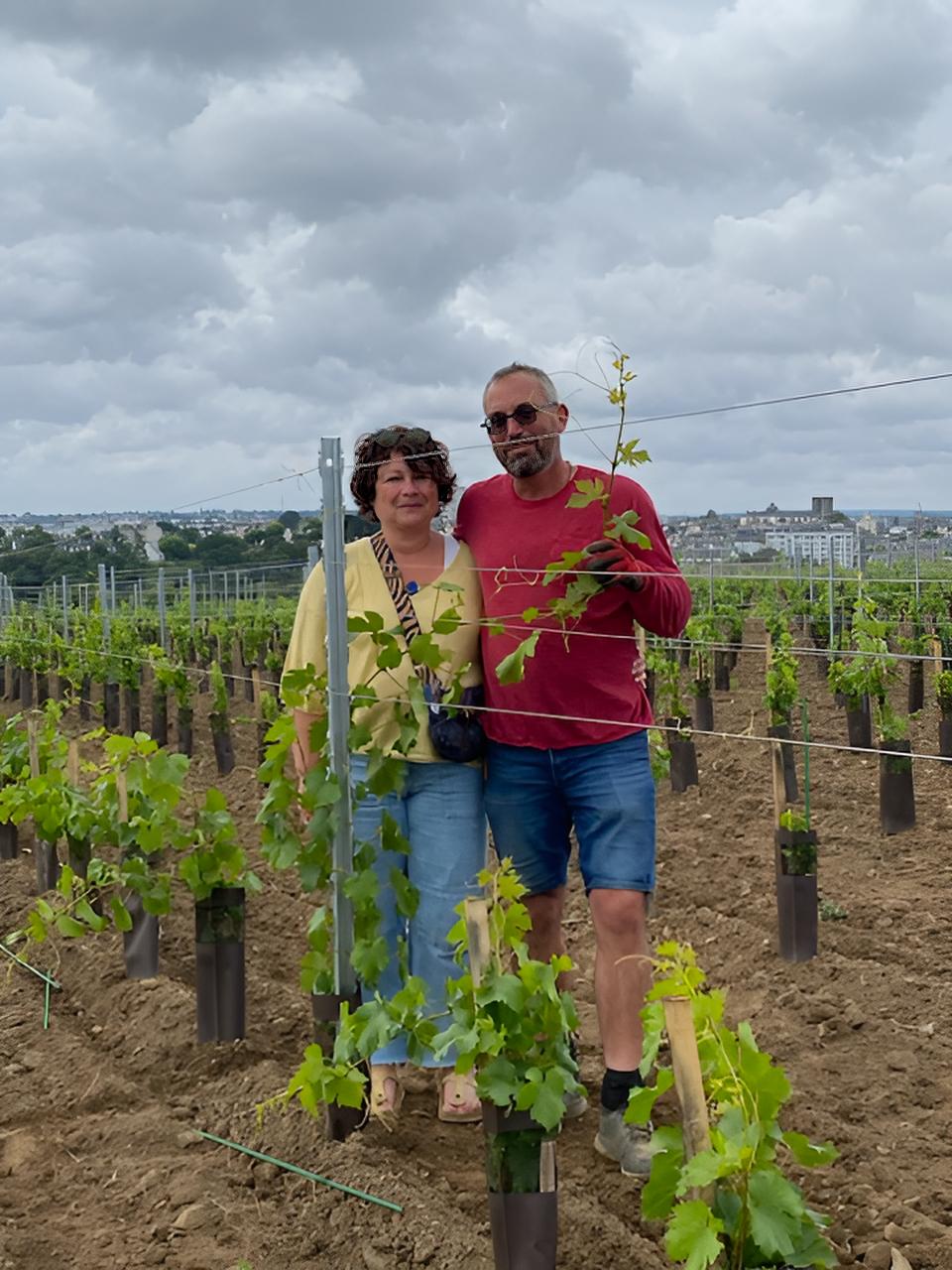
Planting a vineyard? Producing wine in Brittany? In the Côtes-d’Armor? In the Bay of Saint-Brieuc? In Plérin? Disease-resistant grape varieties? No tractor? A fully artisanal approach? This slightly crazy idea became reality with the liberalization of vineyard planting rights across Europe in 2016, which enabled the revival of Breton viticulture. This project would not have been possible without the help and collaboration of many people, especially the support of my wife, Emmanuelle, and my children, whom I warmly thank.
Sustainable and organic viticulture
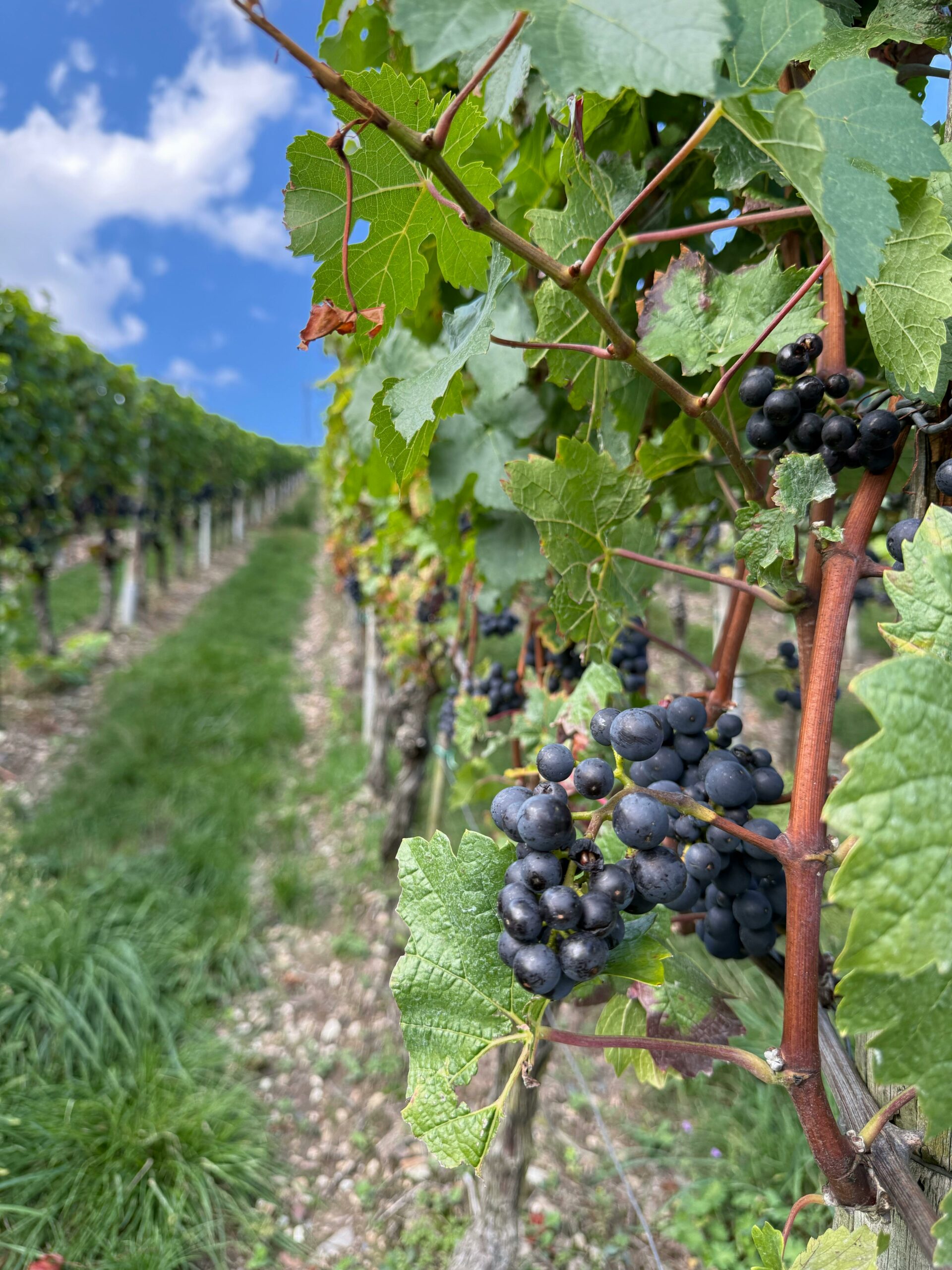
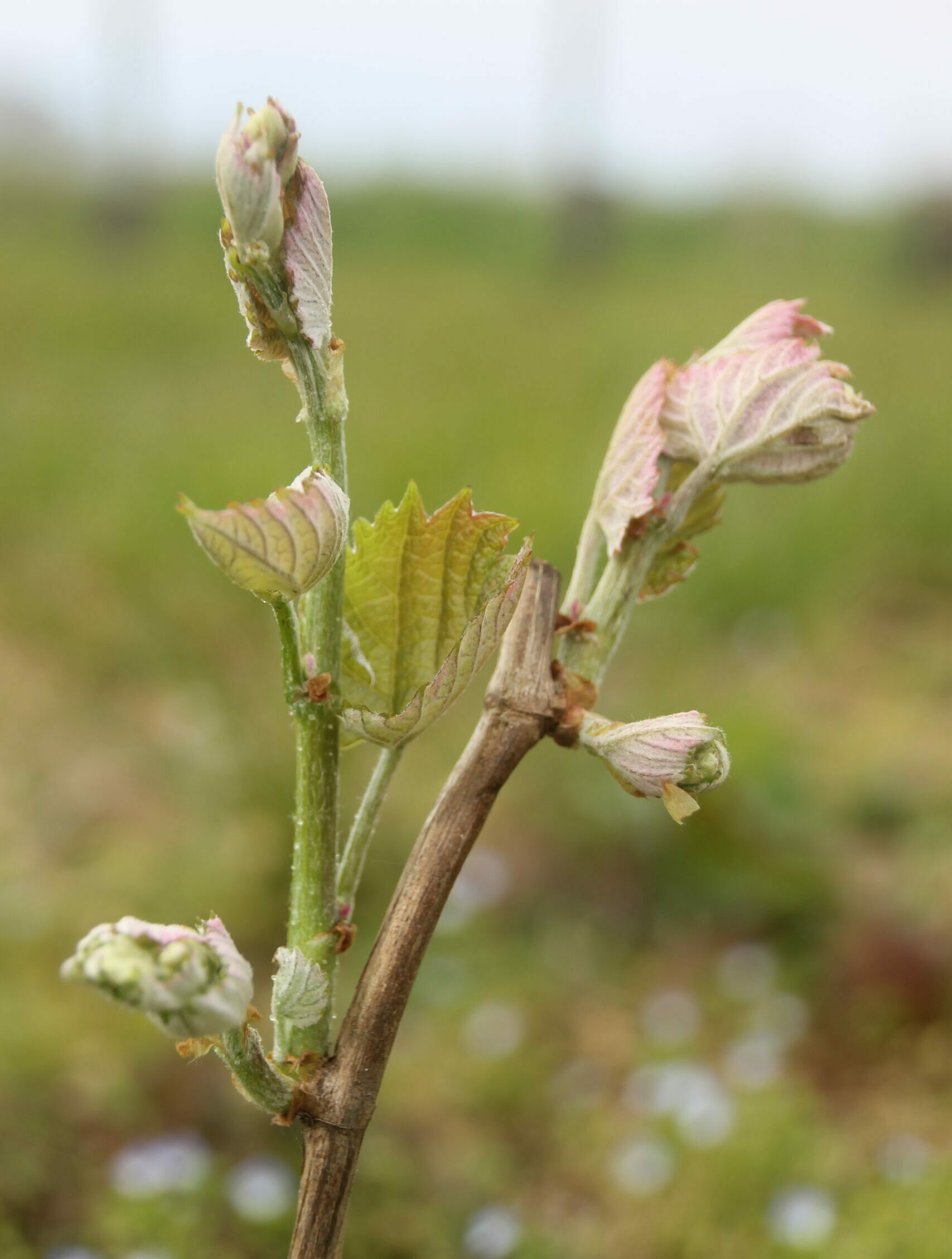
Producing an organic, healthy wine that respects the land and biodiversity is at the heart of the project. On a preserved terroir, I cultivate the vines on living soils. To support vine health, herbal infusions and plant decoctions (horsetail, fern, comfrey, meadowsweet…) are used, following the principles of biodynamics.
A hedgerow has been planted along the plots to encourage biodiversity. Committed to recycling and reuse, the vineyard fencing was made using former mussel stakes from the Bay of Saint-Brieuc, visible at low tide from the estate.
A vineyard between sea and sky
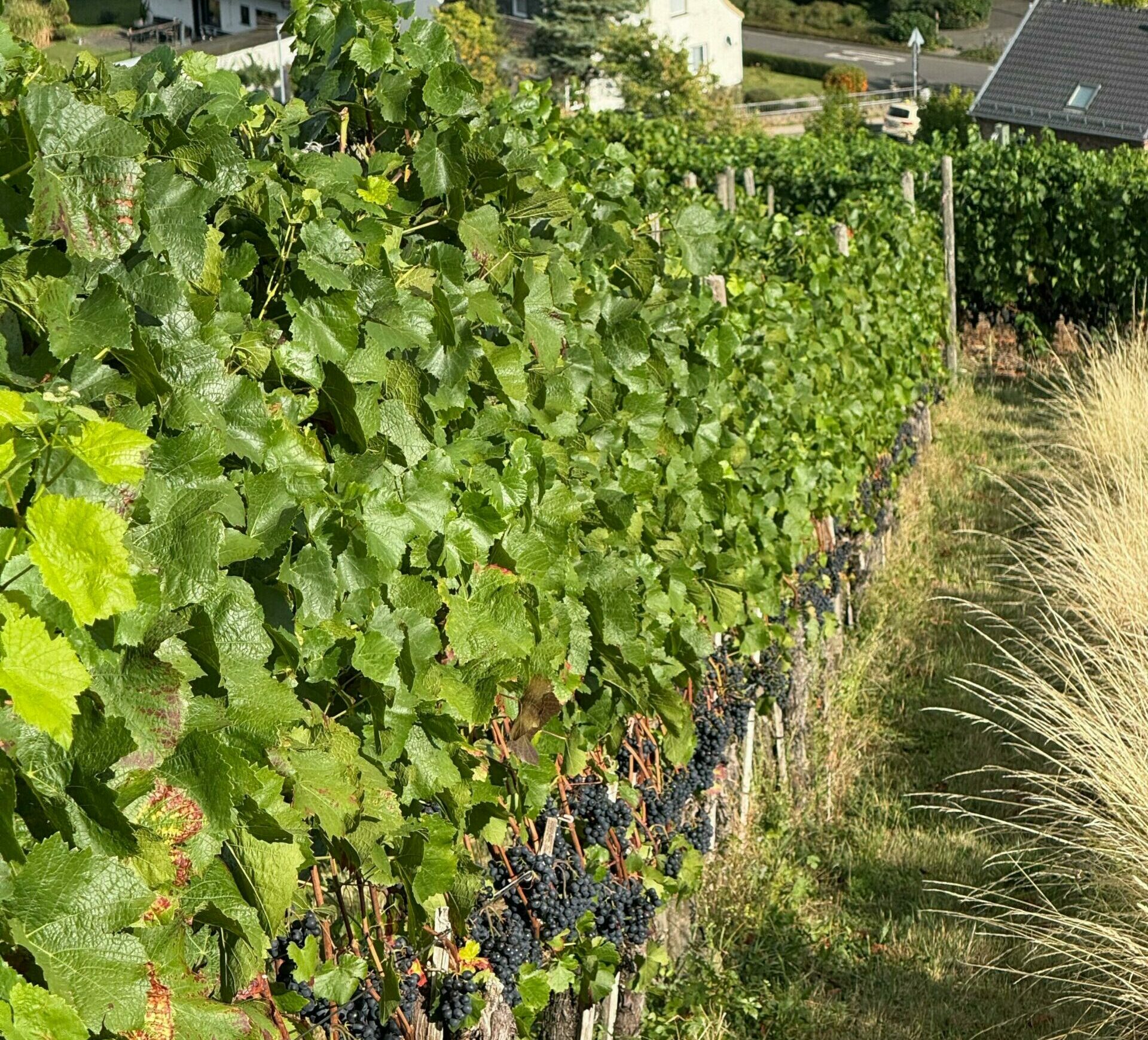
Overlooking the port of Le Légué between Plérin and Saint-Brieuc, the vineyard benefits from the sea’s moderating influence: temperatures remain mild all year round. The sea and the wooded valleys of Saint-Brieuc provide the necessary water. The south-facing slope offers warmth and light.
The vineyard lives to the rhythm of the tides, water, wind, and light, in a small island of biodiversity between Plérin and Saint-Brieuc.
New grape varieties for new wines
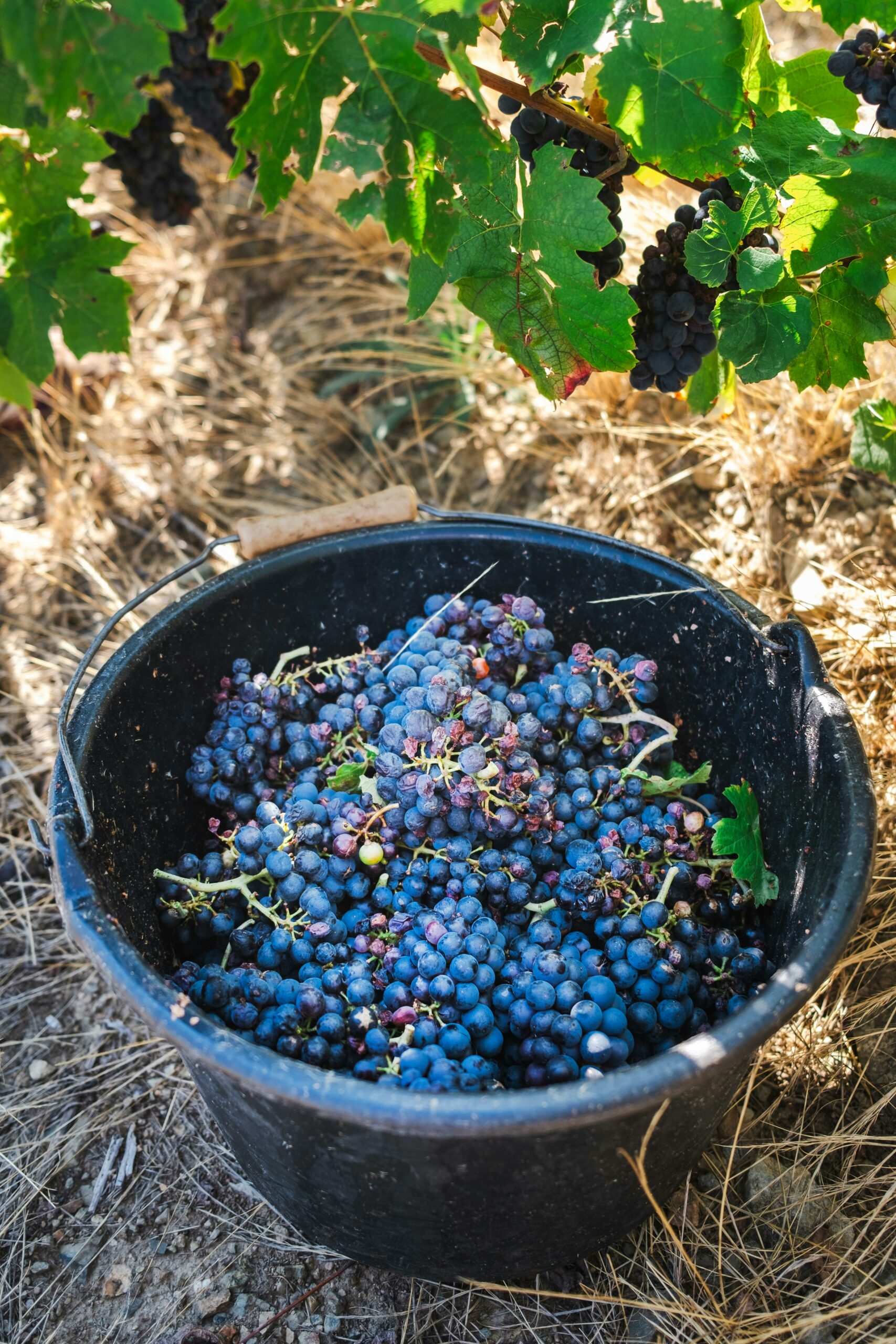
PIWI grape varieties result from research carried out by nurseries, crossing traditional European vines (Vitis vinifera) with more resilient wild varieties.
Resistant to downy mildew and powdery mildew, they require fewer treatments, help preserve the environment, and reduce resource use. They therefore address today’s climate challenges, without compromising on organoleptic qualities, comparable to those of traditional grape varieties.
Three varieties have been planted in equal proportions to craft fine wines:
Pinot Kors
Solaris
Soreli
See you in 2028 to taste new Breton wines, made from new grape varieties in a new wine-growing region!
Why Kdouar ?
• A nod to the name of the neighborhood where the vineyard is located in Plérin: “La Cadoire.”
• The letter K is a strong symbol in Breton history and language. It refers to an inhabited place, an estate, a hamlet — here, my vineyard. It is also the chemical symbol for potassium, an element essential to the growth of vines and grapes.
• “Douar” means soil, earth, living matter in Breton. A proverb says: “Re gozh an douar evit ober goap anezhi” — “The earth is too old to be mocked.”
K DOUAR embodies this idea: producing wines that are respectful, good for both consumers and the planet. Brittany is my adopted land, and K DOUAR is a way to pay tribute to it.
Kdouar, a collective project
Une viticulture durable et bio-logique
Producing an organic, healthy wine that respects the land and biodiversity is at the heart of the project. On a preserved terroir, I cultivate the vines on living soils. To support vine health, herbal infusions and plant decoctions (horsetail, fern, comfrey, meadowsweet…) are used, following the principles of biodynamics.
A hedgerow has been planted along the plots to encourage biodiversity. Committed to recycling and reuse, the vineyard fencing was made using former mussel stakes from the Bay of Saint-Brieuc, visible at low tide from the estate.
People and animals
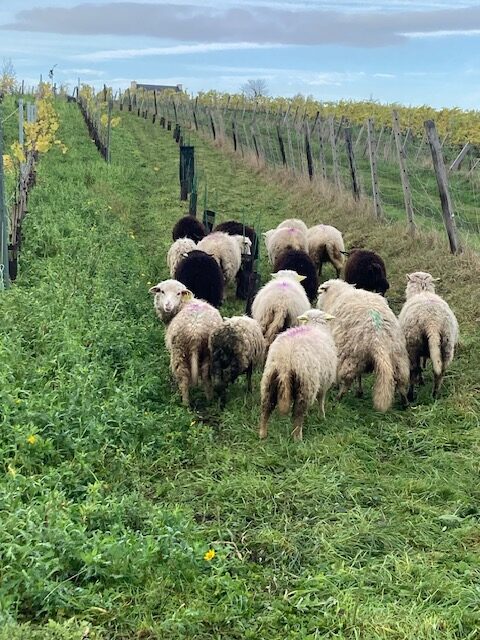
Without a tractor, to avoid soil compaction and reduce the vineyard’s carbon footprint, most of the work in the vines is done by hand. Soil cultivation is carried out using animal traction with a draft horse. In winter, during the vine’s dormant period, sheep graze between the rows.
The Terroir
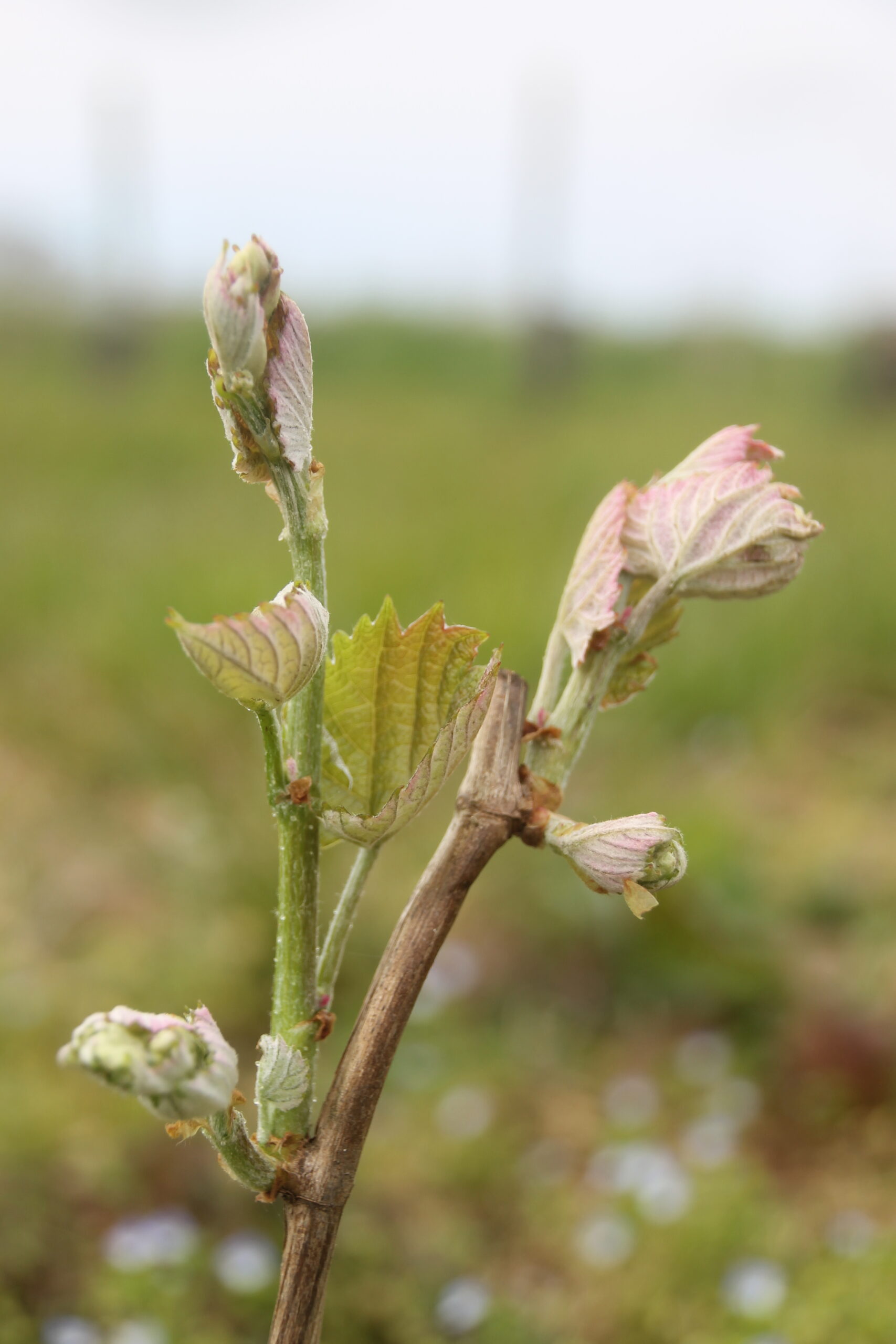
Located on the North Armorican Cadomian chain (over 600 million years old), the terroir of La Cadoire originates from some of the oldest rocks in France.
The vines grow on metamorphic rock rich in biotite: the mica schists of Le Légué.
A vineyard between sea and sky
Overlooking the port of Le Légué between Plérin and Saint-Brieuc, the vineyard benefits from the sea’s moderating influence: temperatures remain mild all year round. The sea and the wooded valleys of Saint-Brieuc provide the necessary water. The south-facing slope offers warmth and light.
The vineyard lives to the rhythm of the tides, water, wind, and light, in a small island of biodiversity between Plérin and Saint-Brieuc.
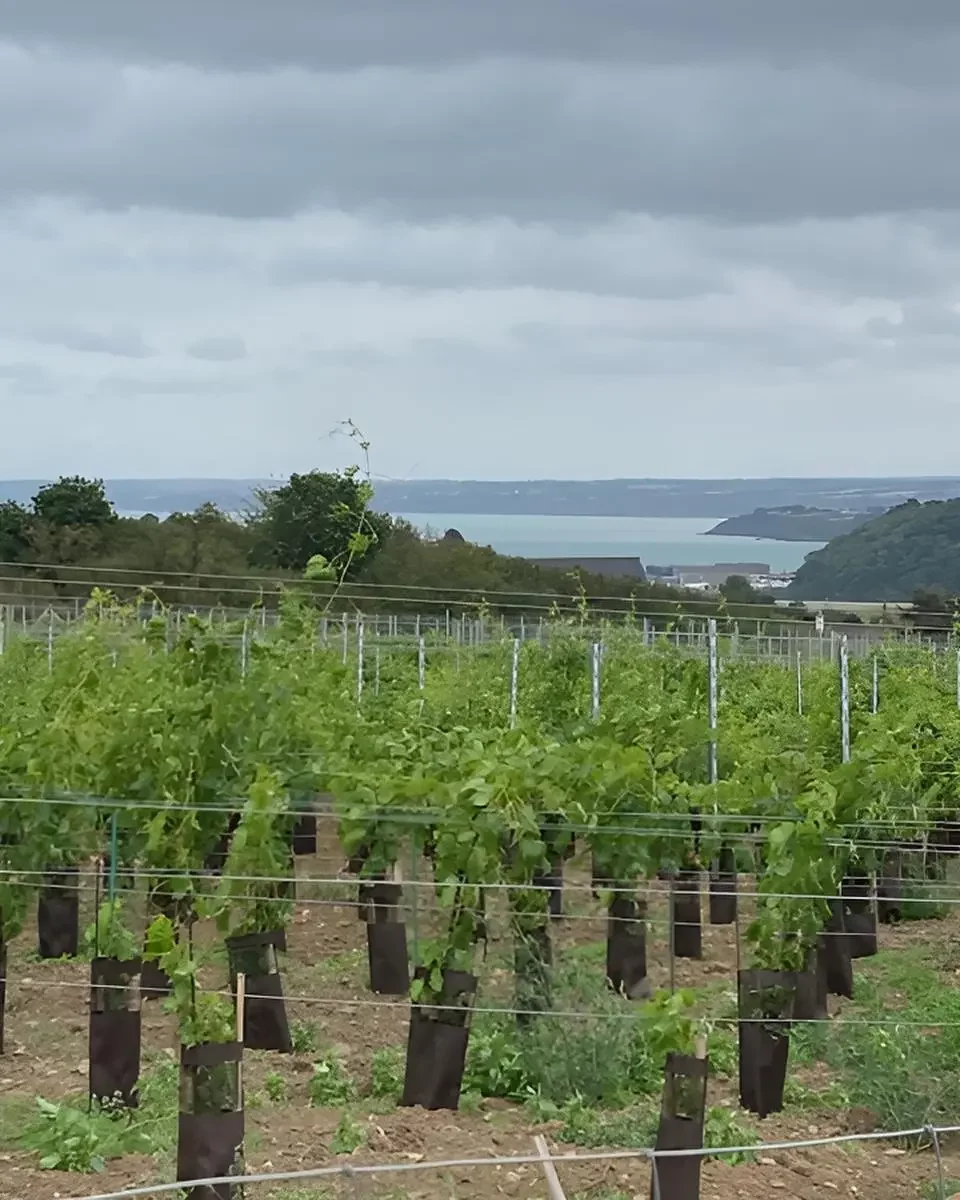
A south-facing slope
Located on a promontory at an altitude of 80 to 100 meters, at the mouth of the Bay of Saint-Brieuc, the vines are planted on a hillside well suited to viticulture. The slope allows for good air circulation around the grapes, as well as rapid drainage of rainwater.
The south-facing exposure of the vineyard slope is ideal for grape production in a northern climate. This orientation maximizes photosynthesis and promotes better ripening of the grape varieties.
New grape varieties for new wines
PIWI grape varieties result from research carried out by nurseries, crossing traditional European vines (Vitis vinifera) with more resilient wild varieties.
Resistant to downy mildew and powdery mildew, they require fewer treatments, help preserve the environment, and reduce resource use. They therefore address today’s climate challenges, without compromising on organoleptic qualities, comparable to those of traditional grape varieties.
Three varieties have been planted in equal proportions to craft fine wines:
Pinot Kors
Solaris
Soreli
See you in 2028 to taste new Breton wines, made from new grape varieties in a new wine-growing region!